Types of relay knowledge enhances reliability in control panel design
In modern industrial and commercial electrical systems, control panels serve as the backbone of operational efficiency. A key factor in ensuring the reliability of these panels is understanding the various types of relays and their specific applications. Knowledge of relay types not only improves system performance but also reduces maintenance challenges and enhances overall safety.
Importance of Relay Knowledge in Control Panel Design
- Optimized System Performance: Choosing the right relay type ensures precise switching, minimizing errors in control circuits.
- Enhanced Safety: Properly selected relays reduce the risk of electrical faults and equipment damage.
- Reduced Downtime: Awareness of relay functionality allows for faster troubleshooting and replacement, improving operational continuity.
Understanding relays goes beyond basic identification. It involves knowing their switching mechanisms, response times, load capacities, and compatibility with different control panel components. Engineers study types of relay for optimal design choices.
Common Relay Types and Their Advantages
- Electromechanical Relays (EMR):
- Ideal for applications requiring visible contacts and clear switching actions.
- Provide robust operation for both AC and DC loads.
- Simple design ensures long-term reliability in standard control panels.
- Solid State Relays (SSR):
- Offer silent operation and faster switching speeds.
- Highly resistant to mechanical wear and vibration, ideal for high-cycle applications.
- Reduce energy loss and heat generation in modern control systems.
- Time-Delay Relays:
- Enable precise control over process sequences.
- Improve coordination in complex panel operations, enhancing overall efficiency.
- Useful for delaying start/stop functions, preventing equipment stress.
- Overload and Protective Relays:
- Safeguard circuits by detecting abnormal conditions.
- Enhance reliability by automatically preventing damage to motors and other devices.
- Contribute to safer, longer-lasting control panels.
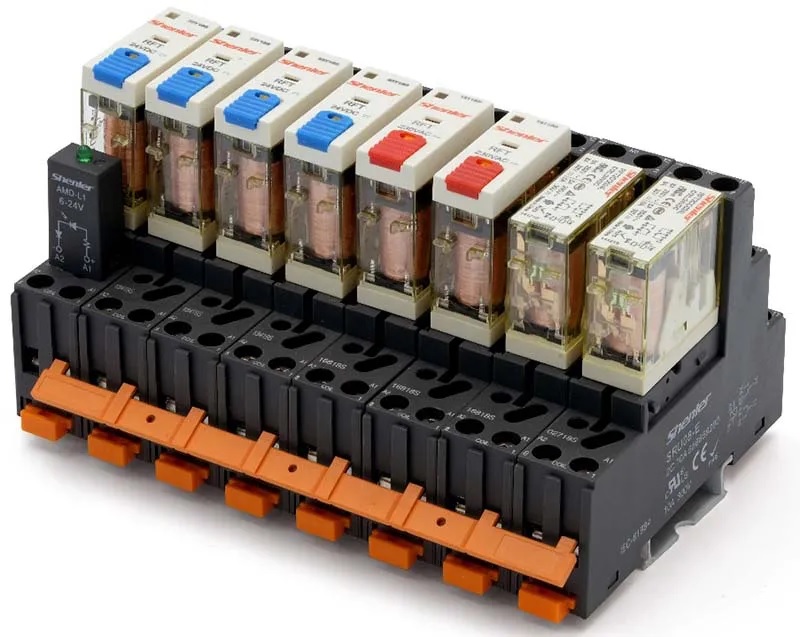
Benefits of Comprehensive Relay Knowledge
- Improved Panel Design: Understanding relay specifications ensures that each component functions optimally in its designated circuit.
- Accurate Load Management: Proper relay selection matches load requirements, preventing overloading and improving energy efficiency.
- Simplified Troubleshooting: Familiarity with relay behavior allows technicians to identify issues quickly, reducing downtime and maintenance costs.
- Future-Proof Solutions: Knowledge of relay types supports scalable and adaptable control panel designs, accommodating system expansions or upgrades seamlessly.
Practical Tips for Engineers and Technicians
- Study Switching Characteristics: Knowing response time, contact rating, and load type is critical for reliability.
- Match Relays to Application Needs: Select relays that align with operational conditions, such as voltage, current, and environmental factors.
- Regular Testing and Maintenance: Periodic checks on relays ensure consistent performance and prevent unexpected failures.
- Document Relay Functions: Clear labeling and schematics support safe operation and rapid troubleshooting.
Conclusion
Mastering the different types of relays and their functions plays a vital role in control panel design. It not only enhances system reliability but also improves safety, efficiency, and longevity. Engineers and technicians who prioritize relay knowledge can create high-performing control panels that consistently meet operational demands and minimize downtime.